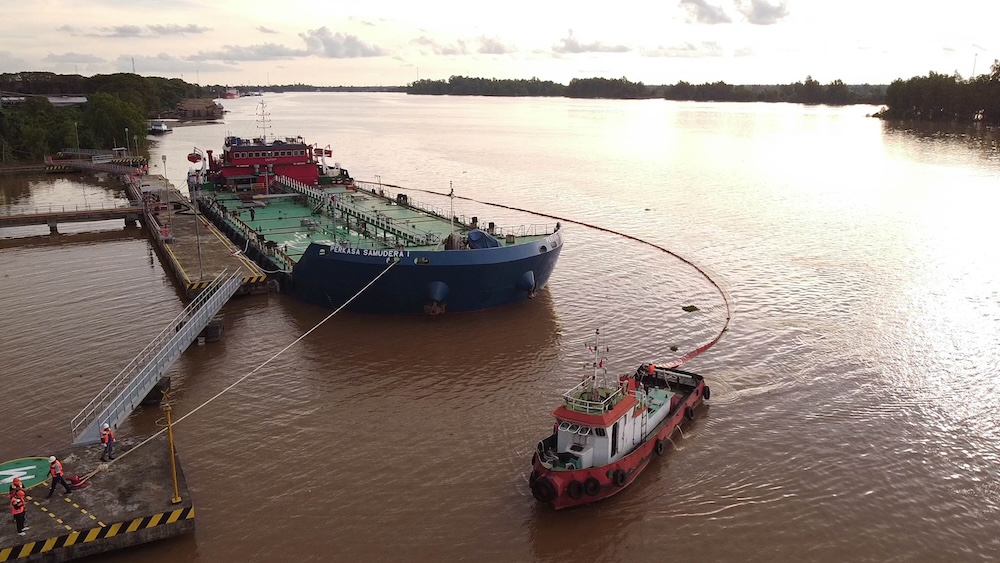
Indonesia continues to experience significant growth in energy consumption in 2026, driven by industrial expansion, infrastructure development, mining activities, transportation needs, and economic recovery across multiple sectors. As Southeast Asia’s largest economy and one of the world’s most geographically complex nations, Indonesia faces a unique challenge in ensuring stable and efficient fuel distribution across thousands of islands.
Oil and gas remain the dominant energy sources supporting Indonesia’s economic activities. Despite ongoing efforts toward renewable energy transition, diesel fuel, industrial fuel oil, and gasoline continue to play a critical role in supporting logistics, mining operations, heavy equipment, marine transportation, manufacturing industries, and regional development projects.
The increasing demand for fuel consumption is especially visible in Kalimantan and Eastern Indonesia, where mining, plantation, infrastructure, and industrial sectors continue to expand rapidly. These regions require a reliable and efficient supply chain capable of delivering fuel to both urban centers and remote operational areas.
However, domestic fuel production remains limited compared to national demand. Indonesia still relies on imports and strategic fuel distribution systems to maintain supply stability. This condition creates ongoing challenges related to transportation efficiency, fuel availability, logistics costs, and operational reliability.
Recognizing these challenges, the Government of Indonesia has introduced regulatory reforms over the past decade to encourage private sector participation in downstream oil and gas activities. These reforms have opened opportunities for private companies to contribute to fuel trading, logistics, transportation, and distribution infrastructure development. As a result, the downstream energy sector has become more competitive, responsive, and capable of supporting Indonesia’s growing energy needs.
Within this evolving industry landscape, Global Borneo Group has emerged as one of the integrated business groups contributing to Indonesia’s fuel distribution ecosystem.
Global Borneo Group: Strengthening Indonesia’s Fuel Supply Chain

Global Borneo Group consists of three integrated companies: PT Global Arta Borneo (GAB), PT Global Borneo Energi (GBE), and PT Global Armada Borneo (GAR). Together, these companies play strategic roles in strengthening fuel trading, distribution, transportation, and operational logistics throughout Indonesia.
Established in 2007, PT Global Arta Borneo (GAB) serves as the foundation of the group’s fuel trading and distribution business. Through years of operational experience, GAB has developed strong capabilities in fuel procurement, distribution management, and customer support across various industrial sectors.
To further expand its operational capacity and market reach, PT Global Borneo Energi (GBE) was established in 2017. GBE focuses on enhancing the group’s distribution capabilities while supporting growing industrial demand across strategic regions in Indonesia.
Supporting the operational backbone of the group, PT Global Armada Borneo (GAR) provides land transportation and logistics services that ensure fuel delivery can be performed efficiently, safely, and reliably. Through integrated logistics support, the group is able to maintain operational continuity even in geographically challenging areas.
Global Borneo Group continues to strengthen its position through strategic partnerships with international energy companies, including ExxonMobil. These collaborations support the company’s ability to deliver reliable fuel products and maintain operational standards aligned with industry expectations.
Today, the group continues to expand its presence across key regions in Indonesia, particularly in Kalimantan and Eastern Indonesia, where energy demand continues to increase alongside industrial development.
Integrated Operations and Services
As Indonesia’s fuel demand continues to rise in 2026, operational efficiency and integrated logistics have become increasingly important. Global Borneo Group supports this need through a comprehensive operational model that combines fuel trading, transportation, logistics, and distribution services.
The company’s operations include:
- Fuel trading and distribution
- Industrial fuel supply services
- Fuel transportation and land logistics
- Fuel delivery support for mining and industrial sectors
- Supply chain coordination and operational support
- Regional fuel distribution management
By integrating multiple business functions within a single ecosystem, Global Borneo Group is able to provide efficient coordination between procurement, transportation, and final delivery operations.
This integrated approach enables the company to respond quickly to customer requirements while maintaining supply reliability across operational regions.
Supporting Indonesia’s Energy Distribution Future

Indonesia’s fuel consumption is expected to remain strong throughout 2026 and beyond, particularly in sectors such as mining, transportation, construction, marine logistics, and industrial manufacturing. As energy demand continues to increase, the importance of reliable downstream fuel distribution companies will become even more critical.
Companies with strong logistics capabilities, strategic partnerships, operational flexibility, and regional distribution networks are expected to play a key role in supporting national energy stability.
With its integrated business structure, operational experience, and expanding regional presence, Global Borneo Group continues to position itself as a reliable partner in Indonesia’s downstream oil and gas industry.
By combining fuel trading expertise, transportation infrastructure, and logistics coordination, the group remains committed to delivering reliable, efficient, and competitive fuel distribution services nationwide while supporting Indonesia’s ongoing economic and industrial growth.